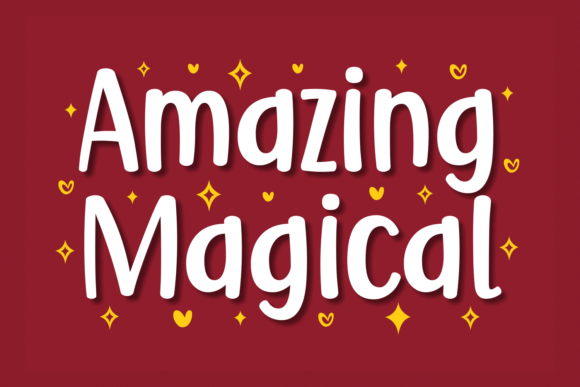
Amazing Magical: A Handwritten Font That Brings Charm to Branding
Opening a Brand Board with a Fresh Typeface
I recently started working on a visual refresh for a local boutique café. The brief called for a warm, approachable identity that would resonate with young families and remote workers. As I opened my brand board in Adobe Illustrator, I decided to try out Amazing Magical—a cute and lovely handwritten font I had seen in a design marketplace. I wasn’t sure how it would translate beyond a sample swatch, so I dropped it into the logo concept to test the vibe.
Right away, the font brought a soft, personal feel to the design. The café’s new name, “The Daily Grind,” needed a twist that balanced the irony of the name with the relaxed atmosphere of the space. Amazing Magical did just that—its flowing strokes and gentle curves gave the identity a sense of intimacy without looking childish or overly cutesy.
What Makes Amazing Magical Stand Out
As a script font in the Script Amp category, Amazing Magical walks the line between casual and professional. It’s a handwritten font with a slightly bouncy baseline, giving it a natural rhythm that mimics real handwriting without being too loose or illegible. The x-height is generous, and the letterforms have a moderate contrast between thick and thin strokes, making it ideal for display use.
What really caught my eye were the extra glyphs—little stars and hearts that can be tucked into a logo or used as decorative elements in packaging design. These extras gave me more creative flexibility, especially when designing a brand board that needed to feel cohesive yet playful.
Testing in Real Design Applications
I used Amazing Magical across multiple brand assets: a logo draft, a business card layout, a packaging mockup for custom coffee bags, a website header, and a social media graphic for Instagram. Here’s how it held up:
- Logo Design: Worked beautifully. The font’s personality shone through without overpowering the brand message. I adjusted the kerning slightly to ensure clarity, but overall, it read well at a medium size.
- Business Cards: Printed in a light pink foil, the font’s curves added a touch of elegance. It paired nicely with a simple sans serif for secondary text.
- Packaging Mockup: On a coffee bag label mockup, the font felt inviting and artisanal. It helped reinforce the brand’s handmade, small-batch positioning.
- Website Header: As a webfont, it loaded smoothly and looked crisp on both desktop and mobile devices. I used it for the main headline and kept body copy in a clean sans serif for contrast.
- Social Media Layout: For an Instagram post promoting the café’s weekend brunch, the font added a personal, handwritten touch that stood out in the feed without being distracting.
When to Use (and Avoid) Amazing Magical
While Amazing Magical is versatile, it’s best used as a display font, accent font, or short phrase font. It excels in headlines, logos, and social media graphics where character and warmth are key. However, I wouldn’t recommend it for long-form body text, especially in editorial design or web content, where readability matters most.
The font’s delicate strokes and slight irregularities can become harder to read at smaller sizes or on low-resolution screens. It also wouldn’t be appropriate for formal corporate design, legal documents, or branding that needs to convey authority or technical precision.
Pairing with Other Fonts
Font pairing is crucial in brand identity work. I found that Amazing Magical paired well with both serif and sans serif fonts. For a more classic look, I used it with a serif like Playfair Display. For a modern twist, I combined it with Montserrat or Lato. The contrast between the fluid script and the clean, structured sans serif created a balanced visual hierarchy that worked well in both print and digital assets.
If you’re working with other script fonts or handwritten typefaces, make sure they don’t compete for attention. Stick to one dominant script and support it with simpler, more neutral fonts.
Technical Considerations and Licensing
Before finalizing any client work, I always check the font’s technical specs. Amazing Magical includes multiple styles, ligatures, and alternate characters, which added flexibility during design. It supports multilingual characters and is available in common file formats like OTF and TTF. Webfont versions were also accessible, which made integrating it into the client’s website straightforward.
One important note: always verify the commercial font licensing. If you’re using the font in brand identity, packaging, merchandise, or templates, ensure you have the proper license. Many marketplaces offer extended licenses for commercial use, but it’s better to double-check before delivering final files to a client.